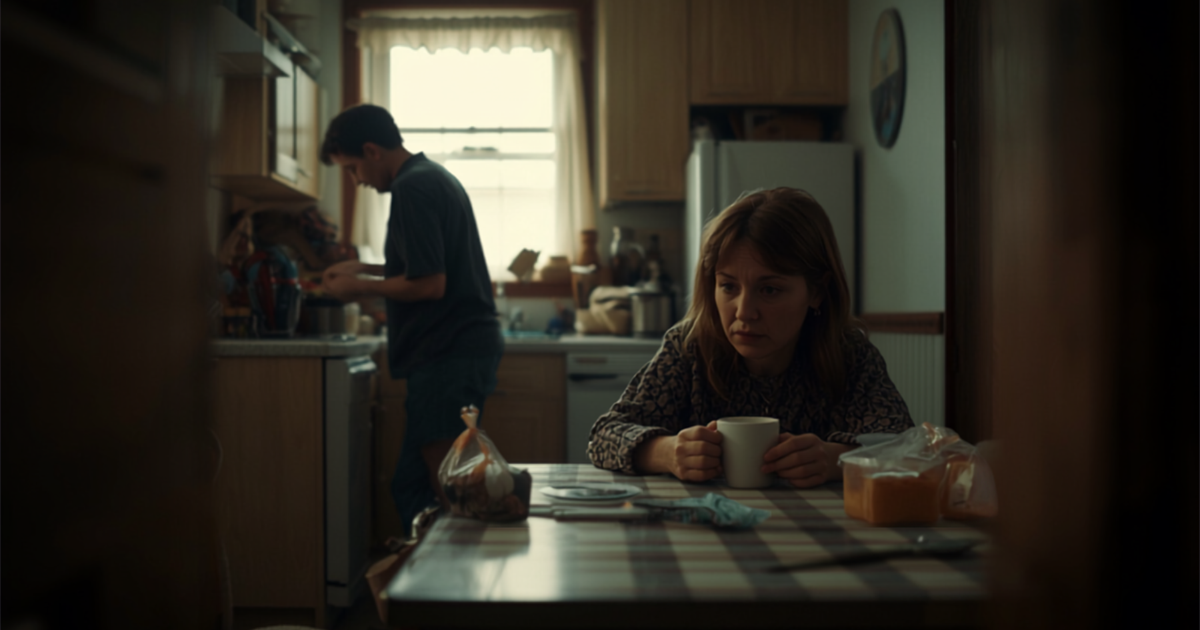
Everyone asks about the person who is ill. Almost nobody asks about the one doing the caring, and they are running on nothing.
The short answer: offer one specific thing at a specific time, and ask about them rather than about the patient. Carers do not take up open offers — not because they are proud, but because working out what they need and how to ask it is one more task in a week that has no room. Name the thing, name the day, build in an easy no, and repeat the offer in month four when everyone else has stopped. And ask “how are you?” with the emphasis, because most weeks nobody does.
Part of our writing on supporting someone who is carrying a lot.
What is actually happening to them
Three things, and only the first is visible.
The work. Appointments, medications, forms, lifts, meals, personal care, chasing the surgery, being the one who notices. It is a job, done alongside their actual job.
The mental load. Holding the whole picture. Tracking what is due. Knowing what changed this week. That runs constantly and it is why they seem distracted even when they are sitting still.
The loneliness. This is the one people miss entirely. Their world has narrowed to a house and a set of tasks, most invitations stopped arriving after the third decline, and they are watching someone they love get worse while everyone asks them for updates.
They are also frequently grieving someone who has not died. That has no ritual attached and almost no social permission, so it goes unspoken.
Why they never ask
Not pride, mostly.
Asking requires working out what you need, deciding which parts a person could do, guessing what this particular person is willing to give, choosing a moment, and phrasing it. That is six pieces of work handed to the person with the least capacity in the room — the exact same trap described in our article on how to ask for help when you are struggling, and carers are the group it catches hardest.
There is also the sense that everyone has their own life, that this is their responsibility, and that they should be managing. And by month six they have stopped expecting offers, because the ones they got were all in the first fortnight.
Offers that get taken up
| Instead of | Say |
|---|---|
| “Let me know if you need anything” | “I’m doing a shop Thursday. What’s on the list?” |
| “You must be exhausted” | “I can sit with your mum Saturday morning. Two hours. Go out.” |
| “How’s your dad?” | “How are you this week?” |
| “We should catch up sometime” | “I’ll ring Tuesday at eight. Don’t pick up if it’s a bad night.” |
| “Shout if you need help” | “I’ve put a lasagne on your step. No need to answer the door.” |
| “You’re amazing, I don’t know how you do it” | “This is genuinely hard and you’re doing it on your own.” |
Two features run through the right-hand column: a specific thing at a specific time, and an easy way out so they are not managing your feelings on top of everything else.
The one that matters most
Time off. Not a task — hours.
Sitting with the person they care for so your friend can leave the house is worth more than almost anything else you can offer, because it is the one thing they cannot generate for themselves. Two hours where they are not on duty. Not to do errands — to sit in a cafe, or sleep, or walk about doing nothing.
Offer it as a fixed repeating slot if you possibly can. “Every second Saturday morning” is worth ten times “any time you need me”, because it is something they can plan a life around rather than something they would have to request each time.
Small things that land
- Food that needs nothing. Left on the step, in containers that do not need returning. Returning dishes is a task.
- Text without needing a reply. “Thinking of you, no need to answer.” Carers accumulate enormous message debt and it becomes another thing they are failing at.
- Remember the dates. Scan days, results, the anniversary of the diagnosis. Nobody else marks these.
- Ask about something else entirely. Football, television, your own ridiculous week. Being a person again for ten minutes is a genuine relief.
- Keep inviting them. They will say no repeatedly and it matters enormously that you keep asking. The invitations stopping is one of the loneliest parts.
- Help with the admin. Forms, benefits, insurance, chasing appointments. It can be done from anywhere and it is a huge share of the load.
What to avoid
Advice they did not ask for. They have read more about this than you have.
“Have you tried…” Yes. They have tried it.
Making them reassure you. If you cry, they end up comforting you about their own situation.
Disappearing because it is awkward. The most common failure by a distance, and the one that hurts most.
Comparing. “My gran was the same” moves the conversation to you and rarely lands as solidarity.
Only asking about the patient. Every single person does this. Being asked about themselves is startling in a good way.
If you want to organise something bigger
If several of you want to help, one person should coordinate — a carer being asked to allocate six willing friends has just been given a management job.
One of you collects offers, works out a rota, and presents it as a finished thing: “Sam’s doing Tuesdays, I’m doing alternate Saturdays, Jo’s doing the shop. Tell us what to change.” A plan they can amend is infinitely easier than a blank page they must fill.
When they cannot work out what to ask for
Sometimes your friend genuinely wants help and cannot organise the request. That is not evasion — it is what capacity looks like when it is gone.
The Help Menu Builder is built for exactly that: it takes someone through what they practically need, sorts it by who could realistically do what, and turns it into a short menu of specific asks in their own words, ready to send. It also produces a version they can hand straight to someone who says “tell me what to do”, so the person offering can pick something instead of guessing.
It runs offline on their own device, so nothing they write goes anywhere. If you want to give something genuinely useful rather than flowers, that is a reasonable thing to point them at — or to sit with them for half an hour while they fill it in, which is often the more valuable half of the offer.
One honest caution
Carers are at high risk of exhaustion, isolation and low mood, and they are very unlikely to raise it themselves.
If your friend seems to be disappearing — not eating, not sleeping, not able to talk about anything else, or saying things that worry you — encourage them to see their GP, and offer to go with them. In the UK they can also request a carer’s assessment from the local authority, which is free and frequently unclaimed, and carer support organisations exist in most countries offering respite and someone to talk to who understands the specifics.
Saying “you’re allowed to need help too” out loud is sometimes the most useful sentence available.
The short version
Ask about them, not the patient. Offer one specific thing at a specific time with an easy way out, because open offers are never taken up. The single most valuable thing you can give is hours where they are not on duty, ideally as a fixed repeating slot. Send food that needs nothing back, message without requiring replies, keep inviting them long after they stop saying yes, and turn up again in month four when everyone else has gone quiet.
Everyone is asking how the patient is. Be the one who asks how they are.
Frequently asked questions
How can I help a friend who is caring for a sick relative?
Offer one specific thing at a specific time — a shop on Thursday, two hours on Saturday, a call on Tuesday — with an easy way to decline. Open-ended offers are almost never taken up, because working out what to ask for is one more task in a week with no room.
What is the most useful thing to offer a carer?
Time off. Sitting with the person they care for so your friend can leave the house is the one thing they cannot generate themselves. A fixed repeating slot is worth far more than an open invitation.
What should I not say to someone caring for a relative?
Avoid unrequested advice, “have you tried”, comparisons to your own experience, and asking only about the patient. Also avoid disappearing because it feels awkward, which is the most common failure and the one that hurts most.
How do I ask how they are without it being a burden?
Ask specifically and put the emphasis on them: “How are you this week?” Add “no need to reply” to messages, since carers accumulate message debt that becomes another thing they feel they are failing at.
When do carers most need support?
After the first month, when everyone else has gone quiet and the situation has become long-term rather than urgent. Marking scan days, results and anniversaries is unusually valuable because almost nobody else does.
Should I keep inviting them out if they always say no?
Yes. They will decline repeatedly and it still matters that you ask, because invitations stopping is one of the loneliest parts of caring. Make it easy to decline and keep the invitation coming anyway.
Last reviewed:
Read next
If this was useful
Mind
Tracking Your Mood Without It Becoming a Chore
Most mood trackers ask too much and get abandoned by February. Why one square a day beats a page, and what the…
Money
Lending Money to Family Without Ruining It
The money is rarely the damage. Not knowing where you stand is. How to decide before you answer, and how to raise…
Money
How to Stop the Spending You Regret Afterwards
The purchase is doing a job that has nothing to do with the thing you bought. What it is actually for, and…
The Rootlyn letter.
One useful page in your inbox now and then — a real tool, a real moment, no noise. Unsubscribe any time.