
The doctor explains the next steps in rapid detail while your pen is still racing to capture the previous sentence. Effective note-taking starts before you enter the clinic: agree that taking notes at a medical appointment is genuinely wanted, write down key details and next actions rather than a word-for-word transcript, mark any unclear point immediately, and clarify instructions before leaving the room.
Finding the right balance between listening attentively and documenting key details depends on clear boundaries established between you and the person you are supporting. Preparing these practical boundaries ahead of time offers practical support for difficult conversations so that the patient remains in control of their own healthcare decisions.
If you would like a prepared role brief and a page for notes, explore the Appointment Ally Brief on Etsy.
A Private Framework for Appointment Support
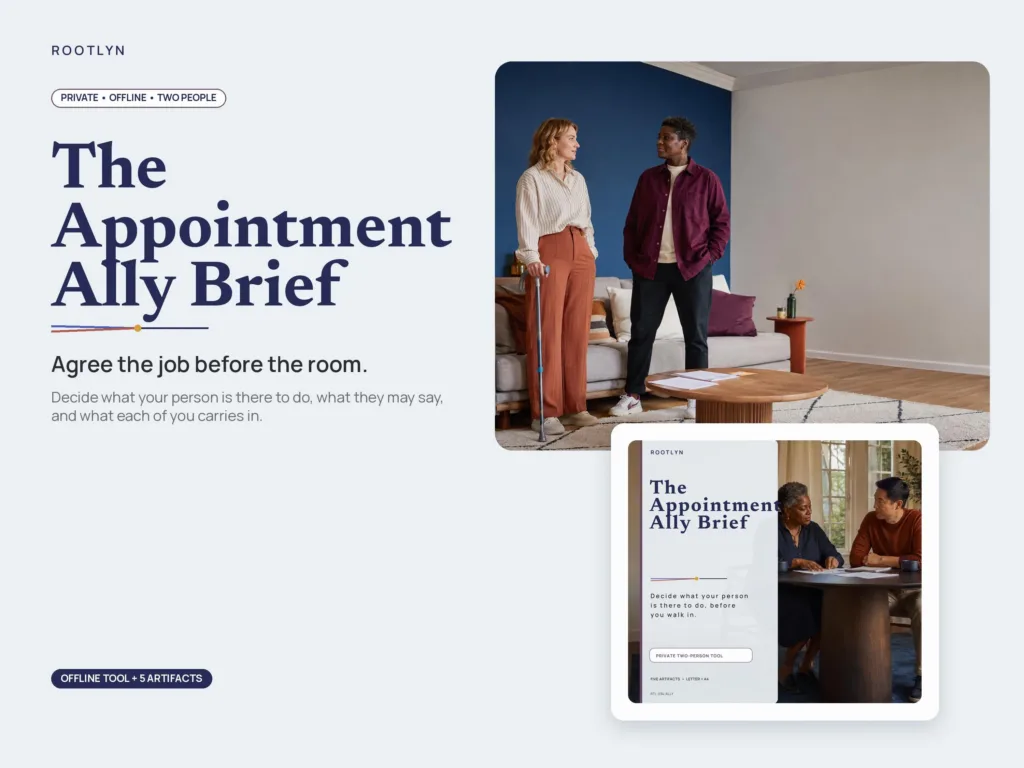
The Appointment Ally Brief by Rootlyn provides a structured, private way for two people to agree on boundaries before stepping into a consultation room. It allows the person attending the appointment to define their preferences privately before inviting their companion to respond honestly to each requested task.
The person attending begins by specifying what they want their companion to do, what they prefer them not to do, and what the companion may mention without asking first. They also record a pause signal, a specific sentence they want spoken if they become quiet, up to five personal questions, and their wishes for the conversation afterwards. Any role the companion feels unable to undertake remains visibly open rather than being marked as agreed.
Preparation Tools
The Ally Brief gives the companion a clear one-page brief, while the My Questions Card gives the patient a dedicated 4 × 6 pocket card for their personal questions and pause signal.
Consultation Pages
The Live Notes page organises points during the visit, while the After the Appointment page gathers reflections, confirmed instructions and remaining questions in one place.
Private Boundaries
The Private Line stays strictly with the person attending, keeping personal thoughts unshared, while the software runs offline in any modern web browser without accounts or remote uploads.
The tool does not ask for health conditions, symptoms, treatments or medical histories, nor does it recommend clinical questions or interpret medical advice. Users download the tool, open the files locally on a computer, tablet or mobile phone, work through the steps together or exchange an export block, and print the required pages in either A4 or US Letter format.
Before the Visit: Agreeing What to Write Down
Stepping into an appointment companion role requires explicit consent rather than unspoken assumptions. Accompanying a friend or family member does not turn you into their spokesperson, medical decision-maker or administrative manager.
Before attending, talk through the practicalities of the consultation so both people understand what kind of help is useful. Initiating this dialogue helps with asking for specific help without feeling overwhelmed, and it gives the patient complete agency over their appointment. You can introduce the conversation with three straightforward questions:
“Would you like me to take notes while you listen?”
“Would you like to see them as we go, or afterwards?”
“If I miss something, are you comfortable with me asking for it again?”
Clarifying these boundaries supports the person’s independence throughout the consultation. Working through agreeing what an appointment companion will do prevents misunderstandings in the room and keeps the patient at the centre of all communication.

Agreeing on boundaries and priorities at home keeps the patient in control during the consultation.
Practical preparation also involves reviewing the official appointment letter or clinic communication beforehand. Guidance from the NHS outpatients and day patients guidance recommends checking local facility arrangements, confirming whether companions are permitted in specific consultation areas, and bringing any requested medication lists or paperwork.
Keep the patient’s question list physically separate from your notepad. When the person holds their own questions card, they maintain control over the agenda and decide when each topic is raised with the clinician.
During the Consultation: Capturing What Matters
Attempting to write down every spoken word during a medical visit creates unnecessary stress and distracts from the conversation. The primary goal of taking notes at a medical appointment is recording actionable instructions, key medical terms, and points that need further review.
Separate your notes into three clear categories: what was said, what is supposed to happen next, and anything not understood. Dividing the page into these distinct sections makes it much easier to spot missing details before you leave the clinic room.
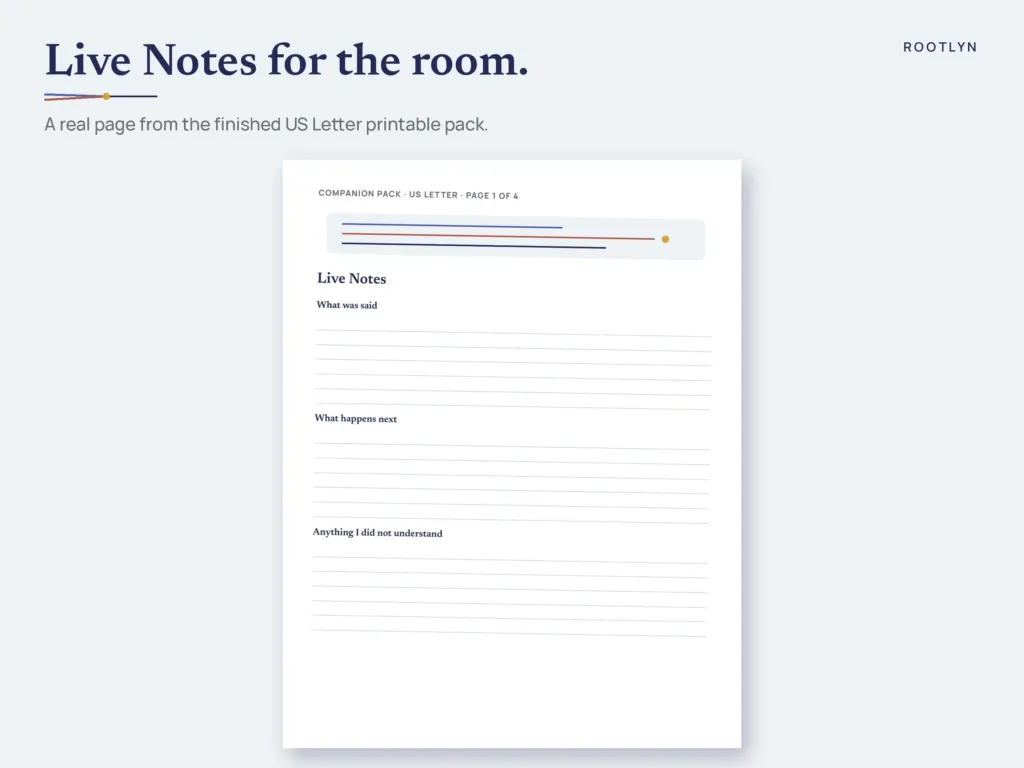
The following invented example demonstrates how neutral administrative details can be structured clearly on a single page during a routine appointment:
| Category | Focus Area | Invented Note Example |
| What was said | Clinic review | Clinician reviewed routine test results from previous clinic visit; no immediate changes to daily routine recommended. |
| What happens next | Follow-up | Administration team will post an appointment letter for a follow-up review; contact the clinic secretary if letter does not arrive. |
| Not understood | Department title | Unclear which administrative department sends the booking notice; ask receptionist to confirm desk contact before departing. |
If a drug name, clinical term or timeframe sounds unfamiliar, ask the doctor or nurse to spell it out or write it down on your pad. Never convert vague or half-heard comments into definitive instructions in your personal notes.

Recording key phrases and follow-up actions prevents the companion from missing the wider conversation.
Keep your sentences brief, using bullet points and standard abbreviations where appropriate. Writing concise summaries leaves your attention free to observe non-verbal signals and support the person seated beside you.
When the Discussion Moves Too Quickly
Medical conversations can move fast, particularly when healthcare professionals present complex clinical options or diagnostic findings. It is entirely reasonable to ask for a brief pause so that critical points can be recorded accurately.
The official NHS guidance on what to ask your doctor highlights that patients and their companions have the right to ask professionals to repeat information or explain terms in plain language. If you notice that important instructions are passing by unrecorded, use one of these calm, respectful phrases:
- “Could you repeat that last part so I can write it accurately?”
- “Would you like a moment to ask your question?”
- “Could we check what should happen next?”
Practising these phrases in advance assists companions with finding words to speak up in formal clinical settings without creating tension. Remember that the companion’s role is to facilitate the person’s voice, not to take over the dialogue.
Always respect the agreed preferences if the person signals that they want to handle a specific topic themselves. Similarly, if the patient indicates that they would like a few minutes alone with the doctor or nurse, step out into the waiting area promptly and without hesitation.
After the Appointment: Reviewing Notes Without Taking Over
The period immediately following a consultation can feel mentally draining. Rather than launching straight into an intensive debrief in the clinic car park or bus stop, ask the person when they would like to look over the written points.
Some people prefer reviewing notes over a warm drink straight away, whereas others need quiet time to process the conversation before discussing next actions. Giving them the choice reinforces their autonomy and prevents post-appointment fatigue.
When reviewing notes together, divide observations into three distinct groups: statements clearly heard and confirmed by the clinician, points that one person thought they heard, and items requiring formal clarification from the practice team.
Companions should never attempt to interpret medical test results, diagnose conditions, or reconcile contradictory clinical directions on their own. If an instruction remains ambiguous after checking your written pages, contact the clinic or GP surgery for professional confirmation.
The After the Appointment page in the Rootlyn framework provides dedicated space to record outstanding questions and agreed next steps in one place. Store and share these notes strictly according to the patient’s preferences, keeping private records secure and readily available for future medical appointments.
When Formal Communication Support Is Needed
A relative or friend taking informal notes provides valuable comfort, but this personal assistance is distinct from official medical advocacy or qualified communication support. Companions are not certified medical interpreters, legal guardians, or professional healthcare advocates.
If the person attending requires professional translation, British Sign Language interpretation, or specialist communication tools, contact the healthcare provider well before the appointment date. Healthcare services across England, Scotland, Wales, and Northern Ireland have distinct processes for booking certified communication support, so always check with your local trust or health board.
Using a private preparation tool does not grant legal proxy access or clinical decision-making powers. Consult the NHS guidance on accessing health services for someone else to understand official carer registration, online GP proxy access, and lasting power of attorney arrangements.
Personal note-taking tools are designed to facilitate mutual preparation between two people. They do not replace the medical records held by the hospital or general practice, nor can they guarantee that a healthcare professional will answer every prepared query during a time-limited clinic session.
Frequently Asked Questions
Should I write down everything the clinician says?
No, attempting to record a full transcript is distracting and unnecessary. Focus on recording key clinical terms, specific medication changes, follow-up actions, and points that need future clarification.
What if I cannot read or understand part of my notes?
Do not guess what an unclear note means. Mark the section clearly and contact the GP surgery or clinic coordinator to confirm the instruction before taking any action.
Does the tool give me access to someone else’s NHS records?
No, the Appointment Ally Brief is a personal offline tool for communication planning. It does not connect to the NHS App, provide proxy medical records access, or grant legal authority to act on someone’s behalf.
Can we prepare offline and print the pages in A4?
Yes, the tool runs entirely locally within your web browser without requiring internet access or account creation after download. It includes printable templates formatted in standard UK A4 as well as US Letter.
Preparing for the Appointment Together
Supporting a family member or friend at a medical consultation works best when communication roles are agreed with honesty and care beforehand. Agreeing on note-taking boundaries protects the person’s independence while providing dependable documentation for the future.
To prepare your roles and take a structured page into the room, get the Appointment Ally Brief on Etsy.
Last reviewed: